Chapter-1
Introduction to Mechanical
Engineering
Engineering:
Engineering is the discipline, art, skill and profession of acquiring and
applying scientific, mathematical, economic, social and practical knowledge to
design and build structures, machines, devices, systems, materials and
processes that safely realize improvements to the lives of people.[1]
The American Engineers Council for Professional Development
(ECPD, the predecessor of ABET has
defined "engineering" as:|
Scientists study the world as it is; engineers create the
world that has never been.
|
"Engineering is quite
different from science. Scientists try to understand nature. Engineers try to
make things that do not exist in nature. Engineers stress invention. To embody
an invention the engineer must put his idea in concrete terms and design
something that people can use. That something can be a device, a gadget, a
material, a method, a computing program, an innovative experiment, a new
solution to a problem, or an improvement on what is existing. Since a design
has to be concrete, it must have its geometry, dimensions, and characteristic
numbers. Almost all engineers working on new designs find that they do not have
all the needed information. Most often, they are limited by insufficient
scientific knowledge. Thus they study mathematics, physics, chemistry, biology
and mechanics. Often they have to add to the sciences relevant to their
profession. Thus engineering sciences are born." [1]
Although engineering solutions
make use of scientific principles, engineers must also take into account
safety, efficiency, economy, reliability and constructability or ease of
fabrication, as well as legal considerations such as patent infringement or
liability in the case of failure of the solution.
MECHANICAL
ENGINEERING:
The branch of engineering that encompasses the generation and
application of heat and mechanical power and the design, production and use of
machines and tools.
Is a branch of
engineering concerned with the design, construction and operation of machines
and machinery.
The branch of engineering that specializes in the design,
production and uses of machines. The physics of mechanics is widely used in mechanical engineering.
The
term "Mechanical Engineering" refers not only to a specific
profession, but also to a spectrum of occupations and challenges that lie
within the broad field of engineering. Mechanical engineering comprises a wide
range of activities including research, development, design, testing,
manufacturing and production, operations and maintenance, and even marketing
and sales. The many areas within the scope of mechanical engineering include
transportation, power generation, energy conversion, climate control, machine
design, manufacturing and automation, and the control of engineering systems,
subsystems and their components.
There are many ways to participate in mechanical engineering activities and not all positions require the same temperament or educational preparation. The most common paths to these careers are through college level programs in mechanical engineering (ME) and mechanical engineering technology (MET). The spectrum of occupations provides employment opportunities for those with associate and bachelors degrees in mechanical engineering technology, in addition to those with bachelors, masters, and doctorate degrees in mechanical engineering. Furthermore, the spectrum of mechanical engineering continues to widen as the acceleration of technological development continues and mechanical engineers engage more and more in activities involving interfaces with other disciplines.
There are many ways to participate in mechanical engineering activities and not all positions require the same temperament or educational preparation. The most common paths to these careers are through college level programs in mechanical engineering (ME) and mechanical engineering technology (MET). The spectrum of occupations provides employment opportunities for those with associate and bachelors degrees in mechanical engineering technology, in addition to those with bachelors, masters, and doctorate degrees in mechanical engineering. Furthermore, the spectrum of mechanical engineering continues to widen as the acceleration of technological development continues and mechanical engineers engage more and more in activities involving interfaces with other disciplines.
Mechanical engineering is the second largest
engineering discipline and one of the oldest. Mechanical engineers apply the
principles of mechanics and energy to the design of machines and devices.
Mechanical engineers are involved with the design of structures, operation and
maintenance of mechanical systems. Mechanical engineers design automobiles,
trucks, airplanes, and trains for transportation; tractors for food production;
interplanetary space vehicles; copying machines, fax machines, staplers, and
mechanical pencils used in the office; and lathes, milling machines, grinders,
and drill presses used in the manufacture of goods. Mechanical engineers also
design and operate power plants and are concerned with the economical
combustion of fuels, the conversion of heat energy into mechanical energy, and
the use of the mechanical energy to perform useful work.
The Mechanical Engineering provides a solid
foundation for professional engineering practice and further study in
Mechanical Engineering or many other related fields. The major requirements
develop the students' ability to apply scientific principles in the design and analysis
of mechanical and energy conversion systems. Students are challenged with
design problems in most of the major courses, which provide opportunities for
developing creativity in solving real-world problems.
This is the largest and oldest branch of the
engineering profession. It is concerned with the design, development,
manufacture, operation and maintenance of many types of plants, machinery and
mechanical products. New areas include Robotic inspection systems, Cryogenic
technology for material treatment, Laser material processing etc.
Mechanical Engineering Education:
Graduation Level:
During the first year of
Mechanical Engineering Degree students learn common engineering methods, mathematics,
physics, chemistry. From second year they are exposed to specialized subjects
like mechanics, engineering design, kinematics, thermodynamics, fluid
mechanics, heat transfer, materials science, vibrations, energy…etc. Mechanical
Engineering students after graduation will have the knowledge of these
engineering subjects and will be ready to use them for industry.
Branches of Mechanical Engineering:
According to the areas
of specialisation in Mechanical Engineering stream, the various branches are
identified which are as follows
1. Thermal Engineering
2. Machine Design
3. Manufacturing
Engineering
What is there to study:
Mechanical Engineers have to study a
whole lot of physics, Engineering drawing, machine drawing and many more
subjects such as
- Statics
Statics
is the branch of mechanics concerned with the analysis of loads (force,
torque/moment) on physical systems in static equilibrium, that is, in a state
where the relative positions of subsystems do not vary over time, or where
components and structures are at a constant velocity.
- Materials Science
Materials science deals
with fundamental properties and characteristics of materials.
Materials science is an interdisciplinary field applying the properties
of matter to various areas of science and engineering. This scientific field
investigates the relationship between the structure of materials at atomic or
molecular scales and their macroscopic properties. It incorporates elements of
applied physics and chemistry.
- Theory of Machines
Theory
of machines is that branch of science which deals with the study of relative
motion between the various parts of a machine and forces which act on them.
Theory
of machines may be divided into kinematics and dynamics
- Dynamics
Dynamics is that branch
of theory of machines which deals with the study of various forces involved in
various parts of the machine. The forces may be either static or dynamic.
In the field of physics,
the study of the causes of motion and changes in motion is dynamics. In other words the study of
forces and motion of objects. Dynamics
includes the study of the effect of torques on motion.
· Kinematics
Kinematics is that branch of theory of
machines which deals with the study of relative motion between the various
parts of the machines. Here the various forces involved in the motion are not
considered. Thus kinematics is the study to know the displacement, velocity and
acceleration of a part of the machine.
or
Kinematics is the
branch of classical mechanics that describes the motion of bodies (objects) and
systems (groups of objects) without consideration of the forces that cause the
motion.
Kinematics is not to
be confused with another branch of classical mechanics: analytical dynamics
(the study of the relationship between the motion of objects and its causes),
sometimes subdivided into kinetics
(the study of the relation between external forces and motion) and statics (the study of the relations
in a system at equilibrium). Kinematics
also differs from dynamics as
used in modern-day physics to describe time-evolution of a system.
- Thermodynamics
The science of thermodynamics deals with the amount of heat
transfer as a system undergoes a process from one equilibrium state to another
and makes no reference to how long the process will take.
Thermodynamics is concerned with the transition of a system
from one equilibrium state to another.
Or
Thermodynamics is the science that deals with the
interaction between energy and material systems.
Or
Thermodynamics is the science of regularities governing
processes of energy conversion.
Or
Thermodynamics
is an axinomatic science which deals with the relations among heat, work and
properties of system which are in equilibrium. It describes state and changes
in state of physical systems.
- Fluid Mechanics
Fluid
mechanics is the study of fluids - liquids and gases. It involves study of various
properties of the fluid, such as velocity, pressure, density and temperature as
functions of space and time.
Fluid mechanics is the study of fluids and the forces on them.
(Fluids include liquids, gases, and plasmas.) Fluid mechanics can be divided
into fluid kinematics, the study of fluid motion, and fluid dynamics, the study
of the effect of forces on fluid motion, which can further be divided into fluid
statics, the study of fluids at rest, and fluid kinetics, the study of fluids in
motion.
- Energy Conversion Engineering
Energy
conversion engineering (or heat-power engineering, as it was called prior to
the Second World War), has been one of the central themes in the development of
the engineering profession. It is concerned with the transformation of energy
from sources such as fossil and nuclear fuels and the sun into conveniently
used forms such as electrical energy, rotational and propulsive energy, and
heating and cooling. It includes study of techniques and fundamentals governing
conversion of one form of energy into another form, such as electrical energy,
heating and cooling energy. The sources include all the conventional and
non-conventional energy sources.
- Heat Transfer
In thermal
science, heat transfer is the passage of thermal energy from a hot to a
cold body. When a physical body, e.g. an object or fluid, is at a different temperature
than its surroundings or another body, transfer of thermal energy, also
known as heat transfer, occurs in such a way that the body and the surroundings
reach thermal equilibrium. Heat transfer always occurs from a hot body to a
cold one, a result of the second law of thermodynamics. Transfer of thermal
energy occurs mainly through conduction, convection or radiation. Heat transfer
can never be stopped; it can only be slowed down.
Heat transfer
is of particular interest to engineers, who attempt to understand and control
the flow of heat through the use of thermal insulation, heat exchangers, and
other devices. Heat transfer is typically taught as an undergraduate subject in
both chemical and mechanical engineering curriculums.
- Manufacturing Engineering
Manufacturing is a field of engineering that generally deals with
different practices of manufacturing; the research and development of processes,
machines and equipment. It also deals with the integration of different
facilities and the systems for producing quality products (with optimal
expenditure) by applying the principles of physics and the study of
manufacturing systems.
Engineering activities
involved in the creation and operation of the technical and economic processes
that convert raw materials, energy, and purchased items into components for
sale to other manufacturers or into end products for sale to the public.
Defined in this way, manufacturing engineering includes product design and
manufacturing system design as well as operation of the factory. More
specifically, manufacturing engineering involves the analysis and modification
of product designs so as to assure manufacturability; the design, selection,
specification, and optimization of the required equipment, tooling, processes,
and operations; and the determination of other technical matters required to
make a given product according to the desired volume, timetable, cost, quality
level, and other specifications.
As technology and
automation have advanced, it has become necessary for manufacturing engineers
to gain a much broader perspective. They must be able to function in an
integrated activity involving product design, product manufacture, and product
use. They also have to consider how the product will be destroyed as well as
the efficient recovery of the materials used in its manufacture.
- Machine Design
Machine
design is creation of plans for machine to perform desired functions. The
machine may be entirely new in concept performing new type of work or it may
perform new type of work or it may perform more economically the work that can
be done by existing machine. It may be an improvement or enlargement of an
existing machine for better economy & capability.
Machine
design is defined as the use of scientific principles, technical information
and imagination in the description of a machine or a mechanical system to
perform specific functions with maximum economy & efficiency. The
definition of machine design contains the following important features
1.
A
designer uses principles of basic & engineering sciences such as physics,
mathematics, statics and dynamics, thermodynamics & heat transfer,
vibrations & fluid mechanics.
2.
The
designer should have technical information of the basic elements of a machine.
These elements include fastening devices, chain, belt & gear drives,
bearings, oil seals & gaskets, springs, shafts, keys, couplings and so on.
A machine is a combination of these basic elements. The designer knows the
relative advantages & disadvantages of these basic elements & their
suitability in a particular application.
3.
The
designer uses his skill and imagination to produce a configuration, which is a
combination of these basic elements. However, this combination is unique & different in different
situations. This intellectual part of selection of proper configuration is
creative in nature.
4.
The
final outcome of design process consists of description will be in the form of
drawings of assembly and individual components.
5.
A
design will be created to satisfy a recognised need of the customer. The need
may be to perform a specific function with maximum economy & efficiency.
·
Automatic Control Engineering:
Automatic
control is also a methodology or philosophy of analyzing and designing a system
that can self-regulate a plant (such as a machine or an industrial process)
operating condition or parameters by the controller with minimal human
intervention.
An
automatic control system is a preset
closed-loop control system that requires no
operator action. This
assumes the process remains in the
normal range for the control system.
An automatic control system has two
process variables associated with it: a controlled variable and a manipulated variable.
A controlled
variable is the process variable that is
maintained at a specified value or within a specified
range.
A manipulated
variable is the process variable that is acted on
by the control system to maintain the
controlled variable at the specified value
or within the specified range.
Functions of Automatic Control:
In any automatic control
system, the four basic functions that occur are:
Measurement
Comparison
Computation
Correction
In
the water tank level control system as an example, the level transmitter
measures the level within the tank. The level
transmitter sends a signal representing the tank level to the level control device, where it is compared
to a desired tank level. The level control
device then computes how far to open the supply
valve to correct any difference between actual and desired tank levels.
- Vibrations :
Mechanical vibration
is the study of measurement of a periodic process of oscillations with respect
to an equilibrium point. This course provides essential concepts involving
vibration analysis, uncertainty modelling, and vibration control. It also gives
a good fundamental basis in computational results, mathematical modelling and
assessment in performance of different systems and system components. Attention
will be given to vibrating systems such as beams, strings, plates and
membranes, vibration isolation, critical speeds, the balancing of rotating and
reciprocating machinery. Basic principles of control theory will be studied from
feedback control systems.
- Engineering Economics :
Engineering economics, previously
known as engineering economy, is a subset of economics for application
to engineering projects. Engineers seek solutions to problems, and the economic
viability of each potential solution is normally considered along with the
technical aspects.
An
engineering economy study involves technical considerations and it is a
comparison between technical alternatives in which the differences between the
alternatives are expressed so far as practicable in money terms
Since engineering is an important
part of the manufacturing sector of the economy, engineering industrial
economics is an important part of industrial or business economics. Major
topics in engineering industrial economics are:
1.
The economics of the management, operation, and
growth and profitability of engineering firms;
2.
Macro-level engineering economic trends and
issues;
3.
Engineering product markets and demand
influences; and
4.
The development, marketing, and financing of new engineering
technologies and products.
- Metallurgy
Metallurgy is a domain of materials science and
of materials engineering that studies the physical and chemical behaviour of
metallic elements and their mixtures, which are called alloys.
Metallurgical Engineering is a broad field that
deals with all sorts of metal-related areas. The three main branches of this
major are physical metallurgy, extractive metallurgy, and mineral processing.
Physical metallurgy deals with problem solving:
developing the sorts of metallic alloys needed for different types of
manufacturing and construction. Extractive metallurgy involves extracting metal from ore. Mineral
processing involves gathering mineral products from the earth’s crust.
- Computer Aided Design/ Drafting (CAD)
Computer-aided design (CAD), also known as computer-aided design and drafting
(CADD), is the use of computer technology for the process of design and
design-documentation. Computer Aided Drafting describes the process of drafting
with a computer. CADD software, or environments, provides the user with input-tools
for the purpose of streamlining design processes; drafting, documentation, and
manufacturing processes. CADD output is often in the form of electronic files
for print or machining operations. The development of CADD-based software is in
direct correlation with the processes it seeks to economize; industry-based
software (construction, manufacturing, etc.) typically uses vector-based
(linear) environments whereas graphic-based software utilizes raster-based
(pixelated) environments.
CADD environments often involve
more than just shapes. As in the manual drafting of technical and engineering
drawings, the output of CAD must convey information, such as materials,
processes, dimensions, and tolerances, according to application-specific
conventions.
CAD may be used to design curves
and figures in two-dimensional (2D) space; or curves, surfaces, and solids in three-dimensional
(3D) objects
CAD is an important industrial art
extensively used in many applications, including automotive, shipbuilding, and
aerospace industries, industrial and architectural design, prosthetics, and
many more. CAD is also widely used to produce computer animation for special
effects in movies, advertising and technical manuals. The modern ubiquity and
power of computers means that even perfume bottles and shampoo dispensers are
designed using techniques unheard of by engineers of the 1960s. Because of its
enormous economic importance, CAD has been a major driving force for research
in computational geometry, computer graphics (both hardware and software), and
discrete differential geometry.
- Automobile Engineering :
Automotive
Engineering is a field closely related to Mechanical
Engineering and is also available as an internationally recognised and
accredited degree program. As an Automotive Engineering graduate, as well as
being qualified for employment in many traditional areas of mechanical
engineering, one will have the skills necessary to be employed as a specialist
in the automotive industry, including major automotive manufacturers and their
suppliers as well as motor sports teams and their suppliers.
With the
specialist expertise in power plant (engine and transmission) design, vehicle
dynamics, vehicle aerodynamics, CAD/CAM, advanced manufacturing and quality
systems and project management one will be able to work on the design,
construction, production and maintenance of automotive components and
assemblies in a thriving engineering sector. You may also be involved in
automotive project management and motor racing engineering.
Automotive engineering
involves lots of mechanics, thermodynamics and electrical motion which require
one to be proficient in physics if one aspire to be a specialist in the
automotive engineering field. While studying automotive engineering, the
primary subject will be how motor vehicles work and the many stages that the
manufacturing process follows through to the final assembly. There are
different specialization fields in automotive engineering field including
Automotive Design, Automobile Engineering, Automotive Body Engineering,
Automotive Chassis Engineering, Automotive Controls Engineering, Automotive
HVAC Engineering, Powertrain Engineering, Automotive Technician, Automotive
Interior Engineers, Mechanics, Brake Technicians, Automotive Plant Managers,
Diesel Mechanics and Transmission Technicians.
- Industrial Automation and Robotics
Automation is the use of control systems and information technologies to
reduce the need for human work in the production of goods and services. In the
scope of industrialization, automation is a step beyond mechanization. Whereas
mechanization provided human operators with machinery to assist them with the
muscular requirements of work, automation greatly decreases the need for human
sensory and mental requirements as well. Automation plays an increasingly
important role in the world economy and in daily experience.
Automation has
had a notable impact in a wide range of industries beyond manufacturing (where
it began). Once-ubiquitous telephone operators have been replaced largely by
automated telephone switchboards and answering machines. Medical processes such
as primary screening in electrocardiography or radiography and laboratory
analysis of human genes, sera, cells, and tissues are carried out at much
greater speed and accuracy by automated systems. Automated teller machines have
reduced the need for bank visits to obtain cash and carry out transactions. In
general, automation has been responsible for the shift in the world economy
from industrial jobs to service jobs in the 20th and 21st centuries.
Robotics is the branch of technology that deals with the design,
construction, operation, structural disposition, manufacture and application of
robots. Robotics is related to the sciences of electronics, engineering, mechanics
and software.
Professional Societies:
An engineering
society is a professional organization for engineers of various disciplines.
Some are umbrella type organizations which accept many different disciplines,
while others are discipline-specific. Many award professional designations,
such as European Engineer, Professional Engineer, Chartered Engineer, Incorporated
Engineer or similar. There are also many student-run engineering societies,
commonly at universities or technical colleges.
To name few, the list
and its description is as follows.
1. Indian Society of Mechanical Engineers
(ISME):
"Indian Society of Mechanical
Engineers" is a non-profit Technical Society in India updating vital
information in field of Engineering and Technology. ISME is established in
Madras in 1990 and is being sponsored and supported by various professional
membership organizations, Societies, Institutions, Industries & others. The
ISME represents the many faces of Engineering rather than any one
specialization and is appropriate for all Engineering Professionals throughout
their working life.
Mechanical
Engg, Automobile Engg., Aeronautical Engineering, Production Engineering,
Industrial Engg, Industrial Engg. and Management, Industrial and Production
Engg., Electro Mechanical Engg., Marine Engg., Welding Technology, Fabrication
Technology, Manufacturing Engg., Air-condition and Refrigeration Engg., Tool
and Die Engg., Machine Tool Engg. Production Technology, Aerospace Engg,
Mechatronics. Robotics Engineering, Aircraft Maintenance Engineering, etc.
ISME
is an established key player in the world of engineering and technology. ISME
is now taking forward the challenges of future. It will ensure that the role of
engineers and technologists in various industries that have an impact on our
daily lives is understood. ISME takes on the role of developing, promoting and
announcing the progression of Mechanical Science and transfers the
technology to its Professional Members and, in turn, members of the global
community. ISME operates throughout India in several cities and has more
Professional Members as well as institutional Patrons.
ISME seeks to bring
together individuals, and institutions and Govt. agencies & industries and
Education to evolve and develop Engineering practices in India.
2. Society for Automotive Engineers (SAE) International
SAE is an organization for
engineering professionals in the aerospace, automotive, and commercial vehicle
industries. The Society is a standards development organization for the engineering
of powered vehicles of all kinds, including cars, trucks, boats, aircraft, and
others.
SAE International has 120,000 members around the world. The
mission of SAE International is to enable voluntary consensus on standards
development. The SAE Foundation raises funds to support science and
technology education in students from elementary school through to college.
Encouraging Students in
Science, Technology, Engineering & Math
In 1986, SAE International established
the SAE Foundation to support
science and technology education. One of the most pressing issues facing
industry today is the decline of students enrolling in science and technology
programs. This decline and its impact threaten the ability to meet future
workforce demands. The SAE Foundation encourages and supports the development
of skills related to science, technology, engineering and mathematics.
A
World In Motion is a teacher-administered, industry
volunteer-assisted program that brings science, technology, engineering and
math (STEM) education to life in the classroom for students in Kindergarten
through Grade 12. Benchmarked to the national standards, AWIM incorporates the
laws of physics, motion, flight and electronics into age-appropriate hands on
activities that reinforce classroom STEM curriculum.
The SAE Collegiate Design Series provides an opportunity for college
students to go beyond textbook theory and replicates the process of engineering
design and manufacturing. In the CDS program, a company wants to sell a product
for a specific market segment, for example a radio controlled airplane, a
single seat off-road vehicle, or a single seat Formula style race car. Instead
of doing all the design, manufacturing and testing in house, the customer
chooses to contract out those processes to a supplier, and sends their
requirements out for bid. Student teams act as the suppliers and design, build
and test a prototype vehicle that they believe meets the customer's
specifications. Each team then presents its prototype to the customer at the
annual competitions and is judged on several criteria. The team with the
highest points essentially wins the contract.
Each year, these design
competitions host more than 4,500 students from 500 universities around the
world. The SAE Collegiate Design Series™ competitions include the following:
- SAE Aero Design®]
- Baja SAE®
- SAE Clean Snowmobile Challenge™
- Formula SAE®],
- Formula Hybrid
SAEINDIA Foundation:
SAE is a network
of engineers, executives, educators and students from more than 110 countries
who come together to share information and exchange ideas for advancing the
engineering of mobility systems. SAEINDIA currently has five sections in India.
There are about 2000 regular members and more than 27500 student members in
SAEINDIA and the membership is being continuously increased.
In recognition of
the important contributions made by these members/engineers and realizing the
critical need for educational support, the SAEINDIA Foundation was incorporated
on July 19, 2001 as an All India charitable society with the registrar of
Societies Delhi. The funds raised by SAEINDIA Foundation will be used to
support educational activities including collegiate design programs,
engineering scholarships, industrial lectureship programs, and financial
assistance to students, engineers, scientists, and other outstanding
contributors to mobility technology in India. The source of funds for this
society shall mainly comprise of donations from corporate, allied societies,
individuals and sponsorships.
There are many
scholarships at section level, national level and international level. The
present details are given below (May change every year).
International Level
SAE International and SAE Foundation
offer many scholarships for international students.
Please refer www.sae.org/foundation/scholarships/ for details.
Please refer www.sae.org/foundation/scholarships/ for details.
Section Level
Applications should be made through
the Faculty Advisor or Head of the Department duly attested by the college.
Applications should be sent to section offices. The address of different
sections is given in the last page.
National Level
Applications should be made through
the Faculty Advisor or Head of the Department duly attested by the college.
Applications should be sent to:
Giving away scholarships
Section level scholarships will be
given normally during the annual student convention.
If the student is unable to attend
the function, the scholarship will be sent by post to the address given by the
student.
National level scholarships will be
given normally in major national level SAEINDIA event. If the student is unable
to attend the event, the scholarship will be given in a section event of
student’s convenience. If both the above are not possible, the scholarship will
be sent by post to the address given by the student.
www.sae.org/foundation/scholarships/ provides instructions for international scholarships
www.sae.org/foundation/scholarships/ provides instructions for international scholarships
3.
American Society of Heating,
Refrigerating and Air-Conditioning Engineers:
The American Society of Heating,
Refrigerating and Air Conditioning Engineers (ASHRAE, is an international technical society for
all individuals and organizations interested in heating, ventilation,
air-conditioning, and refrigeration (HVAC&R). The Society, organized
into Regions, Chapters, and Student Branches, allows exchange of HVAC&R
knowledge and experiences for the benefit of the field's practitioners and the
public. ASHRAE provides many opportunities to participate in the development of
new knowledge via, for example, research and its many Technical Committees.
These committees meet typically twice per year at the ASHRAE Annual and Winter
Conferences. A popular product show, the AHR
Expo, is held in conjunction with each Winter Meeting. The Society has
approximately 50,000 members and has headquarters at Atlanta, Georgia, USA.
4. American
Society of Mechanical Engineers:
The American Society of Mechanical
Engineers (ASME) is a professional body, specifically an engineering
society, focused on mechanical engineering. The ASME was founded in 1880 by Alexander
Lyman Holley, Henry Rossiter Worthington, John Edison Sweet and Matthias N.
Forney in response to numerous steam boiler pressure vessel failures. The
organization is known for setting codes and standards for mechanical devices.
The ASME conducts one of the world's largest technical publishing operations
through its ASME Press, holds numerous technical conferences and hundreds of professional
development courses each year, and sponsors numerous outreach and educational
programs.
The
organization's stated vision is to be the premier organization for promoting
the art, science and practice of mechanical and multidisciplinary engineering
and allied sciences to the diverse communities throughout the world. Its stated
mission is to promote and enhance the technical competency and professional
well-being of its members, and through quality programs and activities in
mechanical engineering, better enable its practitioners to contribute to the
well-being of humankind. As of 2006, the ASME has 120,000 members
5. The Institution
of Mechanical Engineers (IMechE) :
The Institution
of Mechanical Engineers (IMechE) is the British engineering society based
in central London, representing mechanical engineering. It is licensed by the Engineering
Council UK to assess candidates for inclusion on ECUK's Register of
professional Engineers. It was founded in 1847 and received a Royal Charter in
1930.
Membership Grades and
Post-Nominals:
The following are membership grades with post-nominals:
- Affiliate: (no post-nominal) The grade for students, apprentices and those interested in or involved in mechanical engineering who do not meet the requirements for the following grades.
- AMIMechE: Associate Member of the Institution of Mechanical Engineers: this is the grade for graduates (of acceptable degrees or equivalents in engineering, mathematics or science)
- MIMechE: Member of the Institution of Mechanical Engineers. For those who meet the educational and professional requirements for registration as a Chartered Engineer (CEng) or Incorporated Engineer (IEng) or Engineering Technician in Mechanical Engineering .
- FIMechE: Fellow of the Institution of Mechanical Engineers. This is the highest class of elected membership, and is awarded to individuals who have demonstrated exceptional commitment to and innovation in mechanical engineering.
and the list
follows
6. United States Green Building Council
(USGBC) (http://www.usgbc.org)
7. American Society for Engineering Education (http://www.asee.org)
8. Society of Professional Engineers (http://www.nspe.org)
9. Board for Professional Engineers and Land Surveyors (http://www.pels.ca.gov)
10.Society of Manufacturing Engineers (http://www.sme.org)
11.American Society for Testing and Materials (http://www.astm.org)
12.Society of Women's Engineers (http://www.swe.org)
13.Society for Philosophy and Technology (http://www.spt.org)
14.American Solar Energy Society (http://www.ases.org)
15.American Wind Energy Association (http://www.awea.org)
7. American Society for Engineering Education (http://www.asee.org)
8. Society of Professional Engineers (http://www.nspe.org)
9. Board for Professional Engineers and Land Surveyors (http://www.pels.ca.gov)
10.Society of Manufacturing Engineers (http://www.sme.org)
11.American Society for Testing and Materials (http://www.astm.org)
12.Society of Women's Engineers (http://www.swe.org)
13.Society for Philosophy and Technology (http://www.spt.org)
14.American Solar Energy Society (http://www.ases.org)
15.American Wind Energy Association (http://www.awea.org)
Mechanical engineering industry economy and employment opportunities and market potentiality:
Mechanical engineering industry
is regarded as a major industry throughout the world, specifically in European
union and U.S. and due to its huge volume of production, this industry produces
maximum employment opportunities. This industry is the world's primary capital
goods provider and that is why it has an enormous impact over the economy of
any country. Other industries are also supported and assisted by mechanical
engineering industry in respect of increasing quality of process, developing
new processes or innovating new techniques.
Employment opportunities: For the last couple of years, the employment opportunities of
mechanical engineering industry remain unchanging. Some of the common
mechanical engineering job categories are Assistant Engineers, Assistant
Executive Engineers, Executive Engineers, Superintendent, Junior Engineer, and
other technically skilled workers. Some other fields of mechanical engineering,
where there are recruitment opportunities are production operations,
maintenance, technical sales, managers and administration.
Major Mechanical Engineering Industries:
Few of the major mechanical
Industries are, Pulp and Paper industries, Sugar, Tyres and tubes, Textile,
Machine tools, Petroleum refineries, Power plants (thermal, hydel, nuclear), Railways,
Ship Building, Aircraft building, Automobiles and its components, Automation
and Robotics , Cement, Fertilizers , Renewable energy , Refrigeration and Air-conditioning, Satellite and Space Shuttle
building, Missiles and defence equipments, Earth Moving equipments, Foundry and
Forging, Packaging Industry, Dairy etc.,
Scope and prospects of Mechanical Engineering
Graduates:
Mechanical Engineering finds
applications in all fields of technology. They could work in many industries
including private or public sector industries (such as Indian
Railways, Indian Air Force (Technical), Indian Army, Thermal power corporations etc…) and their work
varies by industry and function. With the rapid rate of expansion in the industrial
sector, the employment potential for mechanical engineers is very high.
In the government sector, fresher
could join as Junior Engineers and go up the ladder as Assistant
Engineers, Assistant Executive Engineers, Executive Engineers,
Superintendent Engineers and so on.
These engineers are required in automobile,
chemical, electronics, steel plants, oil exploration and refining, technical
wings of armed forces, space research organisation, etc. Candidates with post
graduate degree or an additional management degree could find work in
administrative and managerial positions in government departments or public and
private sector industries or do research as well as teaching in Research and
teaching institutes. They could also opt for technical sales / marketing or
work as independent consultants. Several government departments including
Posts and Telegraphs, Defence, PWD, and CPWD employ mechanical engineers.
Aeronautical, agricultural, automobile, chemical, and power plants, as well as
the railways, need mechanical engineers to design and maintain their machinery.
In agricultural sector, mechanical engineers play a vital role by establishing
service centres for maintenance of tractors, oil engines, pump sets, electric
motors and other agricultural equipments. Mechanical Engineering graduates has
several job opportunities in Marine engineering. After undergoing a basic pre
sea training or studying marine engineering or nautical science course, they
can join as engine cadets, marine engineers or navigating officers. Mechanical
Engineering graduates can also opt for M.E/ M.Tech programmes in Marine
engineering, Petroleum engineering, Aerospace/ Aeronautical engineering or
Nanotechnology.
The
Future of Mechanical Engineering: A Vision and a Mission:
Mechanical Engineering has been around for
centuries and will be, for a long time to come, unless there is a miracle in
science that allows humans to deny all laws of mechanics and still allow them
to build stuff that can be used. As of now, the situation is unfathomable.
From basic objects like wheels to the ever
useful screws and inclined planes, from cars to aeroplanes, from paperclips to
ships, from bridges to skyscrapers, they all work under the foundations and
principles laid out by the laws of mechanics.
We have seen how machines have made our lives
easier. Thanks to mechanical engineering, they have increased the efficiency of
the machines that we use and also made it easier to make them. We have seen the
wonders of mechanical engineering, but what is the future of mechanical
engineering?
The future of mechanical engineering is spread
across various emerging streams that hold many promises to make the future a
better place to live in.
Some of the promising streams that are the
quintessential applications of the future of mechanical engineering are:
1) Nano-technology – Nano-engineering to be more
specific
2) Biomechanics - A promising stream of the
future
3) Automobiles and aviation
4) Buildings of the future and urban designing
5) Robotics
... and the list continues, but these are the
major areas where the future of mechanical engineering will logically be
applied. Now let’s understand of what they are and see how they are the future.
Nano-engineering
“Nano” is the word used to measure any object
that is measured in scales of 10 to the power of -9. They are microscopic and
only electron microscopes are used to see such objects. Creating anything of
that microscopic size in itself is a stellar task, let alone applying the
principles of mechanical engineering at that level. Nano-engineering is mainly
used in the field of research and medicine. It is used to create materials that
are not affected by normal factors like weather and corrosion, etc. Materials
designed by nano-engineering are lighter and stronger than other materials. The
mechanical structure of the materials is changed thereby giving enhanced
properties to the materials. A concept using carbon nanotubes by NASA is said
to be able to link the surface of the earth and the satellite thereby making a
direct connection to a satellite. This is the potential of nano-engineering.
Biomechanics
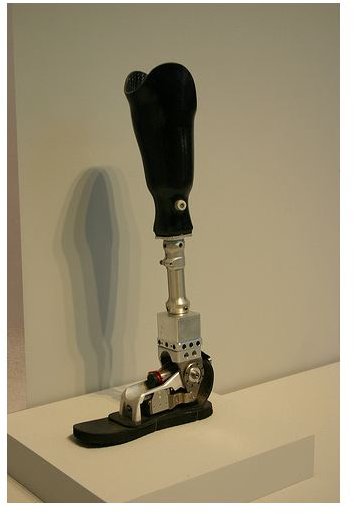
Bionics is the boon of modern medical science
that promises to make the lives of millions better. “Bionic” is the term used
to refer to the artificial material or object that mimics the action done by a
part of the human body. For example, a bionic arm mimics the actions of a human
arm; the bionic leg mimics the human leg. They are created using the principles
of biomechanics. Experiments are going on that promise bionic chests and bionic
necks. The functions and the operations of the bionics that copy their human
counterparts heavily depend on the principles laid by mechanical engineering.
Bionics is one area where we can see the wonders of what the future of
mechanical engineering has in hold for us and how it is being applied in
day-to-day life.
Automobiles and Aviation
Mechanical Engineering has helped in creating
the fastest cars that are capable of traveling 400+ kph (248 mph) and in the
making of the most comfortable vehicles on the planet that are used by
millions. The huge aircraft that enable millions every day to reach from one
corner of the globe to the other in a matter of hours all are the result of
extensive improvement and implementation of mechanical engineering. The
strength of the body and the way the automobiles and aircraft are built are
results of extensive mechanical engineering and testing. Advancements in
mechanical engineering are applied to automobiles to decrease their carbon
footprint and make them more eco-friendly and economical while simultaneously
giving more efficiency.
Buildings of the Future and Urban Design
Huge structures like the Burj-Khalifa, Taipei
101, and many other tall buildings use mechanical engineering for the structure
of the building. Taipei 101 uses mass dampers for stability so that there is a
uniform weight distribution so that the buildings don't get unstable easily.
The mechanical structure of the buildings are so adjusted that they are
resistant to winds of high speed and natural disasters like earthquakes,
storms, etc. The mechanical structure of the building is built such that any
tremors at the base of the building are gently damped and the vibrations do not
cause any serious effects. Thus mechanical engineering plays a pivotal role in
the construction of buildings along with various other sciences.
Robots
Robots like ASIMO can walk, jog, climb stairs,
greet people, and do a lot of other things. Robots like ASIMO are the future.
For all those actions the robots need to work like humans and mechanical engineering
helps in the functioning of the limbs and other body parts. The same principle
of biomechanics is used in this area of science. Nano robots are also in the
making that are said to be of immense use in the field of medicine, though many
oppose the concept as they are also potential weapons of mass destruction and
cannot be stopped easily.
Future
challenges for a Mechanical Engineering:
Mechanical engineering encompasses a wide range
of products in today's market. Everything that you can think of that is a
machine had its birth in mechanical engineering -- cars, coffee makers,
answering machines, televisions, commercial airplanes. Mechanical engineers
work in a variety of fields such as automotive, mining, industry and military.
Mechanical engineering, while it is a scientific field by itself, can branch
out into other scientific fields such as nanotechnology, robotics and medical.
Confidentiality
Keeping a project under wraps is no easy feat.
With the various media, cell phones and the Internet, word gets around easily.
Before you know it, people halfway across the world have heard about your
project. Until you are ready to unveil your latest creation, try to keep as
much information to yourself and to your project co-workers as possible.
Technology Advancement
All forms of technology are advancing at an
incredible rate. Mechanical engineering encompasses almost everything in the
technology field. If you are a mechanical engineer with an automobile emphasis
and you design a revolutionary car that is popular with consumers, you need to
start on the next project to make an even better car. Therefore, you must
always stay ahead of the current trend. Just when the trend ends, the next best
thing comes out.
Sustainability
Making a product that can sustain the test of
time and rapid technology advancement is a true challenge. Unless you create
something truly revolutionary and unique, the technology advancement will catch
up to it. This means paying attention to what people want, paying attention to
what has been made and failed and maybe thinking outside the box to achieve the
sustainability goal. The biggest reward is when your product is what consumers
want for a long time and not something that is idly kicked to the side one year
later.
References :